PARENTING

April 16th, 2011 | Parenting, TV and Media, Waldorf Education | Permalink | Comments (39)

Below is a re-post of a piece I wrote last year for TV-Turnoff Week about my family’s experience pulling the plug many years ago. This year, TV-Turnoff Week has evolved into “Screen-Free Week.”

From the Campaign for a Commercial-Free Childhood‘s website:

Screen-Free Week is an annual celebration where children, families, schools, and communities turn off screens and turn on life. Instead of relying on screens for entertainment, participants read, daydream, explore, enjoy nature, and enjoy spending time with family and friends.

Since we rarely watch TV, the challenge for us this year will be turning off our computers! Impossible for me now that I own an internet business. But eager to participate,  I am committing to no Facebook, Twitter or recreational use of the computer for the week.

I hope my story will inspire you to join me!

TV-TURNOFF WEEK: PULLING THE PLUG

Fourteen years ago, I was a young mother living in Hollywood, the media capital of the world. My husband Max worked in the entertainment industry, and I had been an actress prior to my son Harper’s birth. We were a family immersed in the culture of media.

During Harper’s early years, I was clueless about the effect of media on young children. I never questioned the effect of TV viewing on his developing brain. After all, he only watched “educational” shows on PBS and family-friendly videos, like Disney movies. He loved them! What could be wrong with that?

TV-Turnoff-Week

When he was four years old, I visited the Pasadena Waldorf School and became enchanted by what I saw. Intuitively, I knew that this was a healthy environment for children. I began to research and to learn as much about Waldorf education as I could.

I learned that Waldorf educators strongly discouraged TV and electronic media viewing by young children. This was a novel idea to me, but as I read more about the effect of media on children’s brain development, I started questioning the wisdom of continuing to allow Harper to sit in front of a screen for hours a day. But how, I wondered, would I get through my days without the electronic babysitter? How would I get dinner made? How would I take a shower? It didn’t help that Max was not convinced that TV, in moderation, was a harmful thing.

In April of that year, I learned about TV-Turnoff Week—a week in April during which families are encouraged to turn off their TVs for a week. I decided to give it a try to see if we could survive a week with no TV. At the beginning of the week, I shut the doors to the TV cabinet and hid the remote.

I would be lying if I said it was easy. Harper and I both experienced withdrawal symptoms. On the first couple of days, Harper would ask for Sesame Street and Mr. Rogers. Why, he pleaded, couldn’t he watch “Peter Pan?” I told him the TV was “resting” for a few days, and endured his whining with resolve. Silently, I wondered if I would last the week, feeling like he suddenly needed my constant attention. It was so much easier make dinner and straighten the house when I could just pop in Mary Poppins.

During the week, I decided to invest in some new art supplies. I bought stacks of drawing paper, and new sets of beeswax crayons and colored pencils. Then by day four, I witnessed a miracle. The whining stopped. I watched in awe as Harper became engrossed in drawing. Almost overnight, I saw his drawings transform from immature scribbles into representational images. Suddenly he was drawing pictures of pirate ships, castles, knights and dragons. He would sit at the little table in his room and draw picture after picture. Prior to this, I didn’t think he had the capacity to sit and focus for so long.

The drawing continued through long periods during days five and six. I could prepare dinner again while he was happily occupied, with the TV still hidden in the dark cabinet. I wouldn’t have believed it possible! When he wasn’t drawing, he became more interested in building with blocks and playing with puzzles.

I never anticipated such a dramatic change in only a week. By day seven, both my husband and I were convinced that there was no good reason to turn the TV back on. As Max said by the end of the week, “I guess it certainly couldn’t hurt to live without TV.”

We never threw our TV away, though many times I wished we could! Max continued to write about media and could not give up being able to watch World Series baseball. But it stayed turned off most of the time while my two boys were growing up. Though they often complained and questioned why we didn’t watch TV like other families did, Harper has, on more than one occasion, thanked me for not allowing them to watch when they were younger. As teenagers, they watch TV occasionally and enjoy it, but I am convinced that not having spent their childhoods parked in front of screens allowed them to become the creative and resourceful young adults they are now.

Incidentally, Harper has decided to return to his Hollywood roots and is now a college freshman studying filmmaking.

tv

Screen-Free Week 2011 is April 18-24

For more information, help and encouragement:

Screen-Free Week

101 TV-Free Alternatives

Unplugged Family Activities

Won’t you join me in participating in Screen-Free Week this year? Share your challenges and successes here!


Add comment
  • Bookmark and Share
December 7th, 2010 | Music, Parenting, Waldorf Education | Permalink | Comments (13)

Today, I’d like to introduce you to a friend of mine, Amy Robbins-Wilson. Amy is a talented singer, author, and practitioner of mindful parenting.

Be sure to read through to the end for a special giveaway that Amy is offering!

Amy Robbins Wilson, Mommy Jingles

I’ve gotten to know Amy through our mutual association with Spindlewood Waldorf Kindergarten and LifeWays Center in Lincolnville, Maine, and Amy and I were both teachers this past summer at the northeast LifeWays training for childcare providers inspired by Waldorf education.

Oh, and Amy’s son Clayton happens to be one of the children who appears in the slideshow on the new Bella Luna Toys‘ homepage!

I invited Amy to share with us the interesting work she’s been up — finding a way to help mothers transform their days with children through song.

As a Waldorf early childhood teacher, I learned how effective singing can be in easing transitions, eliminating conflict, and how much joy and lightness it can bring to the days we share with the children. Amy has come up with a unique video course for parents who may not be accustomed to singing through the day, or those who think that they can’t sing (never true!), or don’t know any songs.

Can you tell us a little bit about yourself and your family, Amy?

I am a singer, a storyteller, an author and artist.  I am the lucky wife of an amazing man who builds me up as we dream our way forward.  I am the blessed mother of a son who teaches me each day what it means to be fully present and full of joy.

What about your musical background? Can you tell us more?

I’ve always loved to sing and performed my first solo in preschool when I was three.  It was a song about mothers that I no longer remember but now seems like such an indicator of the future!  My life has been a journey of losing and finding my voice.  I actually stopped singing for about ten years to pursue “more serious matters” until I realized that music was an inescapable force in my life.  I studied music in high school and have performed professionally most of my life.

I received an M.A. in Ritual Song and Chant from the Irish World Music Center (now the Irish World Academy of Music and Dance) in Limerick, Ireland.  Once I became a mother, music became both a tool and a refuge for me.

You know that I’m a big fan of your book Transformational Mothering and your lullaby CDs, which I think offer a lovely calming and grounding experience to mothers of young children. What led you to create your latest project, “Mommy Jingles?”

I developed Mommy Jingles because I was looking for ways to connect to my newborn son, to teach him, to communicate with him and to keep my spirits up as I went through some serious baby blues.

Transformational Mothering

Clayton was born prematurely and his ears were so sensitive that he could not listen to a full lullaby for the first ten months.  He would burst out in tears when I sang which was a real ego deflater.  So I started out with humming and then made little jingles for our day that he could use as cues and markers and Mommy Jingles was born.

It was a revelation to me when he began to respond.  He knew that the getting in the car jingle meant we were getting in the car, he knew that the napping jingle was for napping.  It brought us even closer and I felt like such a great mother,  which was a rare feeling for me those first few months when I was feeling overwhelmed and a bit lost.  Mommy Jingles made our day fun and I realized just how brilliant even the smallest babies are.

Other moms started to ask me what I was doing and I shared songs with them. When I started to hear back from them about how Mommy Jingles helped, I was thrilled and decided to create our online course.  My passion is supporting mothers and this seemed a great way to do it.

Can you give us some ideas on how parents can use singing during challenging times of the day with young children. How can singing ease difficult transitions to, say, bedtime, or separating at daycare?

Read the rest of this entry »

Add comment
  • Bookmark and Share
September 3rd, 2010 | Childhood, Parenting, TV and Media, Waldorf Education | Permalink | Comments (3)

Well, September 1 has come and gone. It was the date I had hoped to get the new and improved Bella Luna Toys website live. I didn’t make my original goal, but I am determined to open its doors to you before the month is over.

Plugging away around-the-clock, as I am—editing product descriptions, uploading photos, and adding scores of new natural Waldorf toys—has left me with very little time to do much writing. (Even though I have dozens of ideas percolating!)

In the meantime, I thought I’d leave you with some interesting reading for the long weekend. Here are a few of my favorite blog posts from the past week on the themes of childhood and parenting.

Did you know that spanking is illegal in Sweden?

spanking Sweden

Photo by Linda Aslund

Today on her blog Not Just Cute, Amanda Morgan writes about Sweden’s anti-spanking laws, and offers gentle suggestions for positive discipline (that won’t require calling in law enforcement officials!).

No Spanking in Sweden

Watch What You Say! Young Children Affected by “Racy Talk.”

One of my favorite sites focused on children and media (and my favorite guide for learning what movies may not be appropriate for children and teens) is Common Sense Media. This week, Caroline Knorr addresses a recent report from the American Academy of Pediatrics that determined that “racy talk” and suggestive innuendo doesn’t go over young children’s heads. (Another pet peeve of mine when it comes to Disney movies.)

Racy Talk: Kids Are Listening (and Learning)

Are Our Fears Making Us Crazy?

Another of my favorite bloggers, Lenore Skenazy at Free Range Kids writes about the insane ways in which we behave, propelled by our fears of the all the possible dangers that are waiting to befall our children. On a lighter note, she addresses the absurd comment of a produce distributor that watermelon seeds could pose a choking hazard.

Kids! Watch Out! It’s — God Help Us — a Watermelon Seed!

And more seriously, she recounts a young man’s experience of being harshly and unfairly disciplined in high school for carrying a pocket knife. In his native Switzerland, it was customary for children to carry pocket knives to school. What, I wonder, would public school officials think about the many Waldorf early childhood teachers I know who give a pocket knife to each of their students on his or her sixth birthday? Call the spanking police, no doubt!

The Most Insane Zero Tolerance Story Yet

There you have it. Now I need to batten down the hatches in preparation for Tropical Storm Earl, which is scheduled to hit the coast of Maine this evening. I hope the weather is better where you are, and that your Labor Day weekend is full of play!

What blog posts have intrigued or inspired you this week? Please share your links!

Add comment
  • Bookmark and Share
August 10th, 2010 | Childhood, Parenting, TV and Media, Waldorf Education | Permalink | Comments (35)

Last month, my younger son William and I saw Toy Story 3 in New York City in 3D. I loved it! Yes, you read that right. Miss Sarah, the anti-media-for-young-children Waldorf teacher, absolutely loved Toy Story 3.

Those of you who’ve seen it know that the ending is a tearjerker, but I nearly melted in a puddle of my own tears, thoroughly embarrassing my 15-year-old son. The movie was especially heart-rending for me because my older son Harper is the same age as Andy, the boy to whom the toys belong.

Harper was about four years old when the original Toy Story was released. At the time, we lived in Hollywood, my husband was working in the entertainment industry, and we were invited to the premiere. As perks, we were given full-size Woody and Buzz Lightyear toys, which Harper played with for years.

In Toy Story 3, things have progressed in real time. Andy has grown up and is getting ready to head off to college. And guess what? Harper is 18 now and leaving for college in a few short weeks. Like Andy, he is in the process of saying goodbye to his toys, his childhood, and his parents, so the poignant ending of Toy Story 3 left me crumpled in a sea of wet tissues.

Not only did Toy Story 3 have personal relevance for me, but I also appreciated its compelling story, great dialogue, engaging characters, and its technological sophistication. It’s the first movie I’ve ever seen in 3-D, and it really was a marvel, perhaps one of the best animated movies ever made.

But in spite of my enthusiasm for the movie, I would not recommend it for children under nine. Bracing myself for the backlash, I can already hear the cries of protest: “But it’s rated G!” “We took our four-year-old to see it and he LOVED it!” “Come on, it’s Disney. It’s wholesome family fun.”

Let me explain my thoughts . . .

Read the rest of this entry »

Add comment
  • Bookmark and Share
July 7th, 2010 | Giveaway, Homemaking, Parenting, Play, TV and Media, Waldorf Books, Waldorf Education | Permalink | Comments (55)

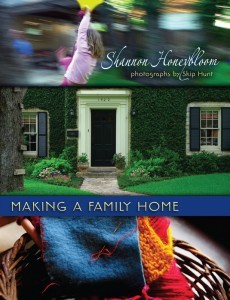
I became a fan of Shannon Honeybloom as soon as I first laid eyes on her beautiful book, Making a Family Home. Not only was I thrilled with its beautiful photographs and ideas on how families of young children can create a more beautiful, nurturing and rhythmic home life, but I was also amazed to learn how much Shannon and I have in common!

Not only do Shannon and I share backgrounds as actors, but we also have both authored books, gone to NYU, lived in Brooklyn, and received an M.S. in Waldorf Early Childhood Education from Sunbridge College in Spring Valley, NY. What are the chances? Though we have never met in person, Shannon feels like a soul sister to me (albeit a younger sister!).

Over the course of the past year, we’ve enjoyed a series of lovely e-mail exchanges. I told Shannon how much I wish her book had been available while I was teaching Waldorf Parent/Child classes. I would have liked to put a copy in the hands of every parent in my class. So naturally I was thrilled when Shannon offered a copy Making a Family Home as a giveaway to readers of Moon Child. I also thought it would be a great opportunity to introduce you to Shannon and get to know her a little better.

Making a Family Home

Shannon Honeybloom, Author of Making a Family Home

SARAH: You know that I am a big fan of your book Making a Family Home. Can you tell us what led you to write it?

SHANNON: When my first child was born, it was a really crazy time for me.  As any new parent knows, one’s world is instantly transformed when baby arrives! I was thrilled to be a mother, but I really had no idea about what it meant to be a mother and to raise children. I started to think about motherhood, caring for a family, and making a family home.  I realized that a happy, healthy home is so important for children, and gives them a strong foundation for their future success and happiness.

Those thoughts and concerns, that early confusion, and also exploring early childhood education and homemaking in a graduate program setting, all provided the spark for Making a Family Home.

SARAH: Can you tell us a little bit about your family and the rhythm of your days?

SHANNON: I have three children–two sons, ages 7 and 9, and a 4-year-old daughter.    They are all in school now, so that provides the big daily rhythm for us, and we tuck in other routines around it.

We wake in the mornings, and to make things easy and smooth, we have already picked out their clothes the night before.  After breakfast (something like pancakes, or on busier days, cereal with toast and fruit) we head off for school.

After school we try to keep extra activities to a minimum and really allow the children to play. Childhood is fleeting and the most important thing children can do is play freely.  Of course, we do have some scheduled activities. My older son loves to play golf, so we have a golf lesson, or a game now and then; and we have swimming lessons in the warmer months.

After dinner, the children get ready for bed.  Our bedtime routine is well established–we light a candle, read a book, say a verse, sing a lullaby, and lights out.  When days are busy and crazy, I treasure that quiet moment in the evening with my children.

SARAH: What effect do you think a child’s environment has on her behavior and sense of well-being?

SHANNON: Everything affects all of us, but children’s senses are especially sensitive to their environment.  Noise, temperature, color, texture, light, and smell all affect us in some way.  Creating a nurturing space for children is about paying attention to how the senses are affected in each moment.  If the television is blaring, if the colors and shapes are hard and garish, if the temperature is frigid, then all those things make us feel and act in certain ways.

If, on the other hand, a room is comfortable, relaxed, and quiet; if the light is gentle, the colors harmonious, and the furniture soft; then that affects us in a certain way, too.  We can bring consciousness to our homemaking in order to create a healthy environment for our children.

If we feel comfortable in our bodies, if our senses are nourished, if we are filled with a sense of well-being, then we are free to pursue our life’s work, whatever that may be!

SARAH: I’ve met many parents who express a desire to transform their home from a place of disorganized chaos to a more nurturing, rhythmic and peaceful environment. The task can seem daunting and overwhelming, and parents often don’t know where to begin. Are there three simple actions you can recommend to take as first steps?

Declutter/Simplify. Release stuff from your life and from your schedule, too.  Making a nurturing home is ultimately about nurturing the relationships in the home, it’s not about all the stuff you can buy.  Focus on the people in the home and not on the stuff.

Simplifying life goes hand-in-hand with de-cluttering. Try to simplify things just a little bit.  It’s hard these days–there is so much to do!  Try and cut back a little, and instead of always being on the run; stop, slow down and spend time with the people you love.

Unplug. Resisting the constant temptation of email, the computer, and cell phone is definitely a challenge for me, but the constant chatter of all these machines is not helpful if one is trying to live in the moment.  I try to find time to really unplug from these gadgets and simply be in the moment with the people I love.  Being with someone–a child or an adult–and showing interest in him or her, is a way to demonstrate your love. But if your interest and attention are always being pulled away by electronic gadgetry, then that is a loss.

Which brings me to my last tip, Love. Making a nurturing home for your family is one way to express your love for them.

SARAH: What are you doing with your life right now? (Besides the important job of parenting!) Are you finding time to pursue acting?

SHANNON: I try to find time to write and act.  I have some really exciting acting projects right now; one is an independent film that is shooting in July.  What I do artistically nourishes me, and in turn, helps me to nourish my family.

SARAH: How do you juggle your various activities and keep balance in your life?

SHANNON: It’s not always easy, but I try.  I think just being aware of the importance of balance is a great start.  When things get crazy and hectic, I try to step back and slow down.  Right now I am enjoying yoga and that helps me to breathe and find a moment of peace amid life’s chaos.

SARAH: Is there anything new you’re working on? What is the best way for readers to keep abreast of your work?

SHANNON: I have some writing projects that I am working on in addition to the film project that I mentioned earlier. I also have a blog, Honeybloom at Home, and that’s one way to find out more and join in the conversation about homemaking and life in general.

SARAH: Thank you so much, Shannon, for sharing your time with us and for the wonderful gift of creating Making a Family Home!

Shannon Honeybloom

Win a Free Copy of Making a Family Home!

For a chance to win a free copy of Making a Family Home, simply leave a comment before Monday, July 12 at 8 a.m. EST, at which time I will close the comments and select a winner at random from all the entries received.

For a multiple chances to win, please spread the word about this giveaway! Blog about it, Tweet about it, or share it on Facebook. Leave additional comments noting each action taken.

The Giveaway is open to all, but a winner outside of the continental U.S will be responsible for shipping charges.

Lots of luck!

Add comment
  • Bookmark and Share

children kids waldorf education families blogs child


Receive blog updates by e-mail
My Shop
waldorf wooden toys child development play imagination
My Book
waldorf wooden toys child development play imagination
Blog Archive
2013 (14)
June (1)
May (3)
April (1)
March (3)
2012 (9)
2011 (11)
2010 (48)
Loving
Subscribe by e-mail
  • Subscribe2
Recommended Reading
Flickr Photos
  • Our Waldorf Homeschool Classroom
    Our Waldorf Homeschool Classroom
    Waldorf Doll from Bella Luna Toys
    Waldorf Watercolor Painting
    Painting with Stockmar Watercolor Paint
    Scott
Facebook Fans
Twitter Updates
children waldorf toys creative play